Does Drinking 3 Cups of Coffee a Day Actually Lower Your Risk of Death?
This article is for health education purposes only and is not intended as medical advice; please consult a professional doctor if you have any health concerns
Coffee may be one of the most misunderstood beverages out there. Some people rely on it to get through the day, others worry it's harming their health, and those trying to lose weight are especially torn: does coffee help you slim down or pack on pounds? There's actually a wealth of research on coffee—the 2017 umbrella review in BMJ alone pooled 201 meta-analyses, and the conclusions were surprising: within typical intake levels, coffee is more often associated with health benefits, and people who drink 3-4 cups a day have about a 17% lower risk of all-cause death compared to non-drinkers[[1]].
Today we'll tackle the 5 most commonly asked questions all at once.
Q1: Does drinking 3 cups of coffee a day really lower your risk of death?
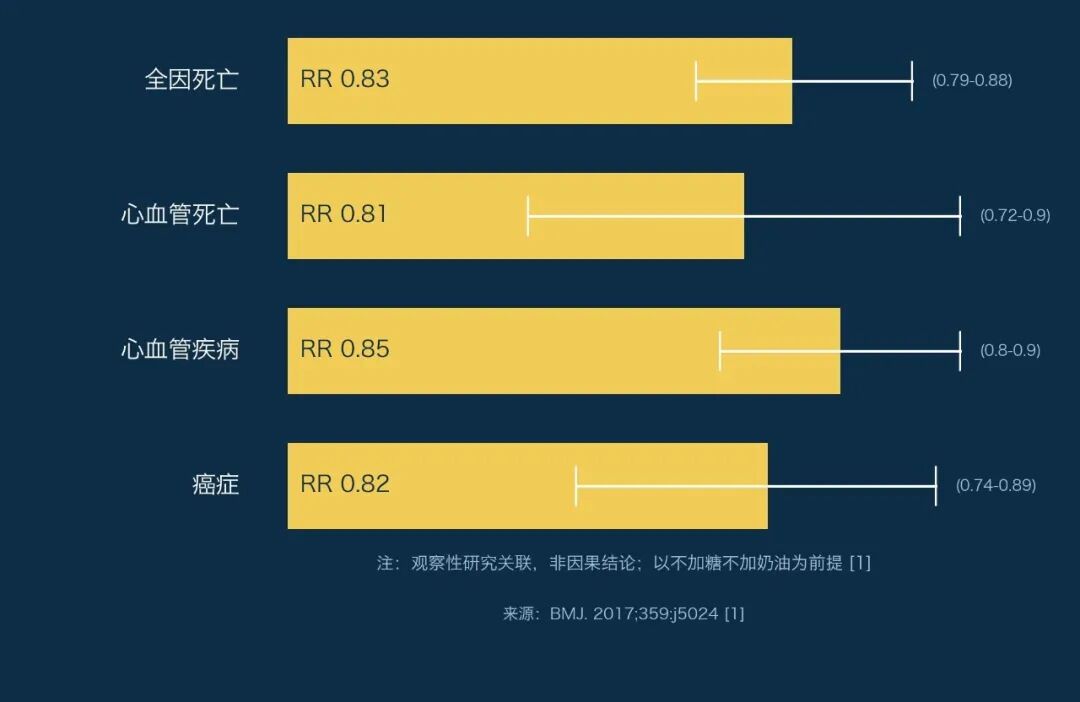
This comes from the 2017 BMJ umbrella review "Coffee consumption and health": after pooling 201 meta-analyses, it found that drinking 3-4 cups a day vs. none was associated with an all-cause mortality RR of 0.83 (about 17% lower), cardiovascular death RR of 0.81, and cancer risk RR of 0.82, with the most pronounced benefit in the 3-4 cups/day range[[1]].
But three caveats: first, this is an association from observational studies, not a causal conclusion that "drinking coffee means you won't die"; second, this "lower risk" assumes you're not adding sugar or cream; third, the benefit plateaus at 3-4 cups—drinking 6 or more cups offers no additional advantage[[1]]. Just treat it as a healthy daily habit—no need to force it down for the sake of "wellness."
Q2: Can coffee boost metabolism and help with weight loss?
Yes, but don't count on it to slim you down. A 1989 trial in the American Journal of Clinical Nutrition found that 100 mg of caffeine (about 1 cup of Americano) can raise resting metabolic rate by 3-4% within 150 minutes; if you drink it every 2 hours over 12 hours, daily energy expenditure can increase by 8-11%, equivalent to burning an extra 79-150 kcal[[3]].
Sounds great, right? The problem is this effect is short-lived and leads to tolerance—your body adapts with regular consumption. What's more sobering is a 2024 meta-analysis of 23 studies and 207,000 people: coffee intake was not significantly associated with obesity risk (OR 1.11, not significant)[[4]]. In other words: coffee itself won't make you fat, but don't expect it to help you lose weight either—what really matters is your overall diet and exercise.
Q3: Will drinking coffee give you diabetes?
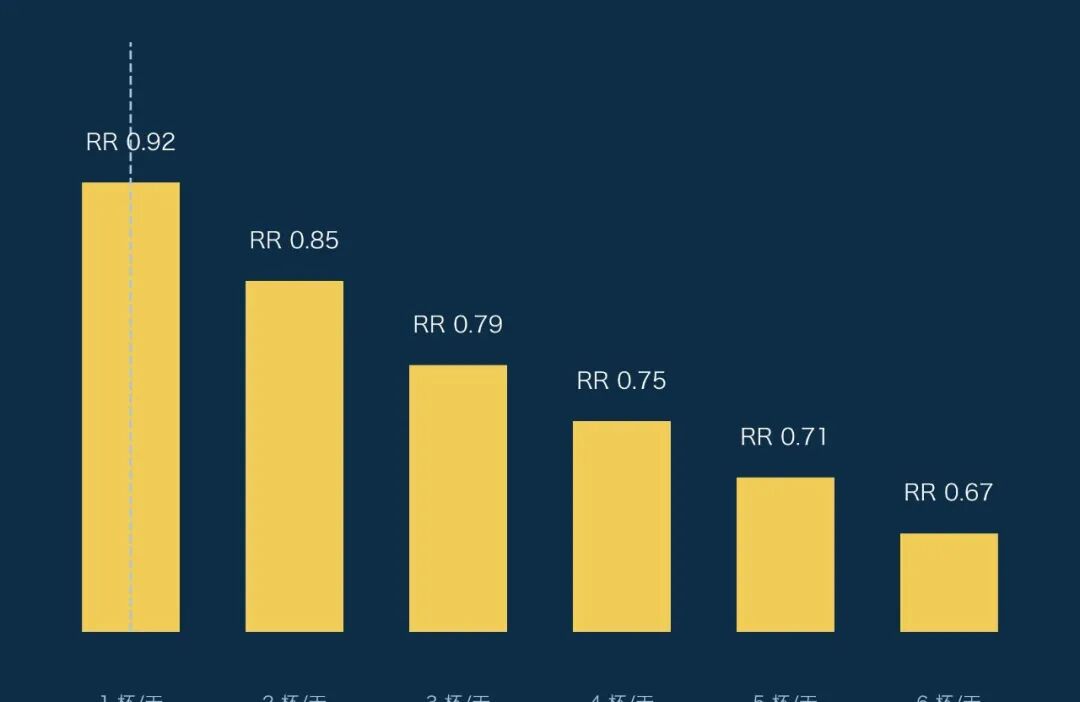
Quite the opposite—a large body of data points to long-term regular coffee consumption being associated with a lower risk of type 2 diabetes. A 2014 Diabetes Care pooled analysis of 28 prospective studies and 1.109 million people found: 1 cup/day RR 0.92, 2 cups 0.85, 3 cups 0.79, 4 cups 0.75, and up to 6 cups 0.67, showing a clear dose-response relationship; each additional cup per day was associated with about a 9% lower risk[[2]].
Interestingly, decaf coffee showed a similar association (RR 0.94 per cup)[[2]]—suggesting the credit may not go to caffeine alone; chlorogenic acid, magnesium, and antioxidants are all candidates. Same old rule: this is "correlation," and most studies used black coffee; drinking three cups of sugar-and-cream-laden "coffee drinks" daily flips the direction entirely.
Q4: Does coffee affect sleep? After what time should you stop drinking it?
Yes, and the effects last longer than you'd think. A 2013 controlled trial in the Journal of Clinical Sleep Medicine found that taking 400 mg of caffeine (about 2 large cups) at 0, 3, or 6 hours before bedtime significantly reduced sleep at all three time points—even drinking it 6 hours before bed still disrupted sleep[[5]].
Caffeine's half-life is about 4-6 hours, so having a large coffee after 2-3 PM will likely affect you at night. And we've discussed the sleep-weight connection before: insufficient sleep makes you crave high-calorie foods the next day. So if you're trying to manage your weight, consider moving your coffee earlier.
Q5: What's the daily limit? Who shouldn't drink coffee?
The European Food Safety Authority (EFSA) concluded that healthy adults should not exceed 400 mg of caffeine per day (about 3-4 cups of coffee), and pregnant women should not exceed 200 mg[[6]]. The following groups should consider reducing intake or choosing decaf:
-
People with palpitations, heart flutters, or noticeable anxiety: caffeine can exacerbate sympathetic nervous system activation;
-
People with chronic insomnia: move your last cup to the morning;
-
People with gastroesophageal reflux or gastric ulcers: drinking it on an empty stomach is especially irritating;
-
Pregnant women and those trying to conceive: keep it under 200 mg per day[[6]].
One more reminder: the "coffee drinks" at bubble tea shops and cafés (mochas, caramel lattes, white coffee) get most of their calories from sugar and cream—a single mocha often exceeds 300 kcal, equivalent to 30 cups of black coffee. If you want coffee while managing your weight, go for an Americano, black coffee, or a latte with just plain milk.
✦ ✦ ✦
Action tips: Drink 1-3 cups of unsweetened black coffee or Americano daily, finishing before 2 PM; sensitive individuals should halve that, and pregnant women should follow their doctor's advice. Coffee itself won't make you fat—it's the sugar and cream you add that will.
If you found this helpful, give it a like or a "reading" mark, and feel free to leave a comment telling us what topics you'd like to see.
Disclaimer: This article is for health education purposes only and is not intended as medical advice; please consult a professional doctor if you have any health concerns. All study conclusions cited are correlational and do not equate to individual causal conclusions.
Conflict of interest statement: The author of this article has no financial relationship with any brand or product mentioned.
© 2026 Sun Saint Hua (Beijing) Medical Technology Co., Ltd.
✦ ✦ ✦
References
-
Poole R, et al. Coffee consumption and health: umbrella review of meta-analyses of multiple health outcomes. BMJ. 2017;359:j5024.
-
Ding M, et al. Caffeinated and decaffeinated coffee consumption and risk of type 2 diabetes: a systematic review and a dose-response meta-analysis. Diabetes Care. 2014;37(2):569-586.
-
Dulloo AG, et al. Normal caffeine consumption: influence on thermogenesis and daily energy expenditure in lean and postobese human volunteers. Am J Clin Nutr. 1989;49(1):44-50.
-
Nemati M, et al. Coffee Consumption, General Obesity and Abdominal Obesity in Adults: A Systematic Review and Meta-Analysis of Cross-Sectional Studies. Adv Biomed Res. 2024;13:122.
-
Drake C, et al. Caffeine effects on sleep taken 0, 3, or 6 hours before going to bed. J Clin Sleep Med. 2013;9(11):1195-1200.
-
European Food Safety Authority. Scientific Opinion on the safety of caffeine. EFSA Journal. 2015;13(5):4102.